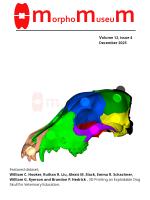
Explodable 3D Dog Skull for Veterinary Education
3D models of Cainotheriids Ossicular chain
3D models of teeth and neurovascular system in the rostrum of Spinosauridae (theropod dinosaurs)
3D GM dataset of bird skeletal variation
Skeletal embryonic development in the catshark
Bony connexions of the petrosal bone of extant hippos
bony labyrinth (14) , inner ear (11) , Eocene (11) , geometric morphometrics (10) , CT-scan (10) , Oligocene (9) , Micro-CT (9)
Lionel Hautier (25) , Maëva Judith Orliac (24) , Laurent Marivaux (19) , Bastien Mennecart (16) , Renaud Lebrun (15) , Rodolphe Tabuce (15) , Pierre-Olivier Antoine (13)
MorphoMuseuM Volume 11, issue 04
<< prev. article next article >>
|
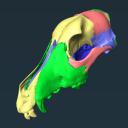
Original article3D Printing an Explodable Dog Skull for Veterinary EducationWilliam C. Hooker
Published online: 17/12/2025 |
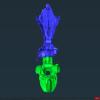
|
M3#1858PLYs of the segmented cranial bones with pre-fabricated magnetic casings and shelves for assembly following 3D printing Type: "3D_surfaces"doi: 10.18563/m3.sf.1858 state:published |
Download 3D surface file |
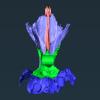
|
M3#1859PLYs of the segmented cranial bones of the "BOTTOM" cranial component. Downloadable for additional learning opportunities for students Type: "3D_surfaces"doi: 10.18563/m3.sf.1859 state:published |
Download 3D surface file |
Arráez-Aybar, L. A., Sánchez-Montesinos, I., Mirapeix, R. M., Mompeo-Corredera, B., Sañudo-Tejero, J. R., 2010. Relevance of human anatomy in daily clinical practice. Annals of Anatomy - Anatomischer Anzeiger, 192(6), 341-348. https://doi.org/10.1016/j.aanat.2010.05.002
Bakici, C., Yunus, H.A., Batur, B., Yalcin, S., Ekim, O., Oto, Ç., 2025. Evaluating the Effectiveness of 3D-Printed Bone Models as Educational Tools in Veterinary Anatomy: Insights from Students and Teachers. The Veterinary Journal, p.106460. https://doi.org/10.1016/j.tvjl.2025.106460
Barreto, J.E.F., Kubrusly, B.S., Filho, C.N.R.L., e Silva, R.S., de Osterno Façanha, S., dos Santos, J.C.C. and Cerqueira, G.S., 2022. 3D printing as a tool in anatomy teaching: an integrative review. International Journal for Innovation Education and Research, 10(6), 58-71. https://doi.org/10.31686/ijier.vol10.iss6.3771
Brumpt, E., Bertin, E., Tatu, L., Louvrier, A., 2023. 3D printing as a pedagogical tool for teaching normal human anatomy: a systematic review. BioMed Central Medical Education, 23(1), 783. https://doi.org/10.1186/s12909-023-04744-w
Bunke, L., Harrison, S., Angliss, G., Hanselmann, R., 2024. Establishing a working definition for veterinary care desert. Journal of the American Veterinary Medical Association, 262(1), 1-8. https://doi.org/10.2460/javma.23.06.0331
Chapinal-Heras, D., Díaz-Sánchez, C., Gómez-García, N., España-Chamorro, S., Pagola-Sánchez, L., de Corselas, M.P.L. and Zafiria, M.E.R.Á., 2024. Photogrammetry, 3D modelling and printing: The creation of a collection of archaeological and epigraphical materials at the university. Digital Applications in Archaeology and Cultural Heritage, 33, p.e00341. https://doi.org/10.1016/j.daach.2024.e00341
Eyre, P., 2011. All-purpose veterinary education: a personal perspective. Journal of Veterinary Medical Education, 38(4), 328-337. https://doi.org/10.3138/jvme.38.4.328
Gokhare, V.G., Raut, D.N. and Shinde, D.K., 2017. A review paper on 3D-printing aspects and various processes used in the 3D-printing. Int. J. Eng. Res. Technol, 6(06), pp.953-958.
Hadžiomerović, N., Šunje-Rizvan, A., Maksimović, A., Šatrović, L. and Tandir, F., 2025. Use of 3D printed low-cost models for veterinary clinical skills training. Open Veterinary Journal, 15(2), p.863.
Huri, P.Y., Oto, Ç., 2022. 3D printing in veterinary medicine. Ankara Üniversitesi Veteriner Fakültesi Dergisi, 69(1), pp.111-117.
Kapoor, K., Singh, N. and Gupta, A., 2024. Evolution of Veterinary Anatomy Education: A Paradigm Shift from Dissection to Digitalization via 3D Visualizations, 3D Reconstructions, and 3D Models. In How to use 3D Printing Innovations and Digital Storage to Democratize Anatomy Education (pp. 39-61). Cham: Springer Nature Switzerland.
Kogut, S., Montgomery, M. L., Levy, J. K., 2024. The nonprofit veterinarian shortage: who will care for the pets most in need? Journal of Shelter Medicine and Community Animal Health, 3(1). https://doi.org/10.56771/jsmcah.v3.75
Leonardi, L., Marsili, R., Bellezza, E., Angeli, G., Emiliani, C., Ricci, A. and Rossi, G., 2021. A pilot study on the use of 3D printers in veterinary medicine. Braz J Vet Pathol, 14(3), pp.159-164.
Linnaeus C., Systema Naturae, tenth ed., vol. 1, Holmiae, Salvii, 1758.
Murgitroyd, E., Madurska, M., Gonzalez, J., Watson, A., 2015. 3D digital anatomy modelling–practical or pretty? The Surgeon, 13(3), 177-180. https://doi.org/10.1016/j.surge.2014.10.007
Pokines, J.T., Appel, N., Pollock, C., Eck, C.J., Maki, A.G., Joseph, A.S., Cadwell, L. and Young, C.D., 2017. Anatomical Taphonomy at the Source: Alterations to a Sample of 84 Teaching Skulls at a Medical School. Journal of Forensic Identification, 67(4).
Quinn-Gorham, D. and Khan, M.J., 2016. Thinking outside of the box: the potential of 3D printing in veterinary medicine. J Vet Sci Technol, 7(5), pp.10-4172. http://dx.doi.org/10.4172/2157-7579.1000360
Ricketts, H.K., Salsbury, A.M., Bevan, D.R. and Brown, A.M., 2018. Using immersive visualization environments to engage students in hands-on learning. In Proceedings of the Practice and Experience on Advanced Research Computing: Seamless Creativity (pp. 1-5). https://doi.org/10.1145/3219104.3229274
Savini, A. and Savini, G.G., 2015, August. A short history of 3D printing, a technological revolution just started. In 2015 ICOHTEC/IEEE international history of high-technologies and their socio-cultural contexts conference (HISTELCON) (pp. 1-8). IEEE. https://doi.org/10.1109/HISTELCON.2015.7307314
Stoughton, W.B., 2023. 3D Printed Models for Veterinary Anatomy Teaching. In An Introduction to Veterinary Medicine Engineering (pp. 125-137). Cham: Springer International Publishing.
Suñol, A., Aige, V., Morales, C., López-Beltran, M., Feliu-Pascual, A.L. and Puig, J., 2018. Use of three-dimensional printing models for veterinary medical education: impact on learning how to identify canine vertebral fractures. Journal of veterinary medical education, 46(4), pp.523-532. https://doi.org/10.3138/jvme.0817-109r
Wheble, R., Channon, S. B., 2021. What use is anatomy in first opinion small animal veterinary practice? A qualitative study. Anatomical Sciences Education, 14(4), 440-451. https://doi.org/10.1002/ase.1995
Wilhite, R. and Wölfel, I., 2019. 3D Printing for veterinary anatomy: An overview. Anatomia, histologia, embryologia, 48(6), pp.609-620. https://doi.org/10.1111/ahe.12502
Yang, J., Yan, G. and Geng, P., 2021, February. Study on 3D printing based on UAV oblique photogrammetry. In IOP Conference Series: Earth and Environmental Science (Vol. 676, No. 1, p. 012010). IOP Publishing. https://doi.org/10.1088/1755-1315/676/1/012010
Ye, Z., Dun, A., Jiang, H., Nie, C., Zhao, S., Wang, T., Zhai, J., 2020. The role of 3D printed models in the teaching of human anatomy: a systematic review and meta-analysis. BioMed Center Medical Education, 20, 1-9. https://doi.org/10.1186/s12909-020-02242-x